
TEL: +86-21-59909248
PHONE: +86-13641792935
Views: 0 Author: Site Editor Publish Time: 2026-07-10 Origin: Site


Operating commercial vehicles inherently involves high stakes and tight margins for error. When you train new drivers or manage specialty heavy-duty tasks, safety becomes paramount. Relying on standard passenger-grade secondary brakes introduces a critical liability risk. These light-duty setups simply cannot handle immense stopping forces. A massive gap exists between basic passenger dual controls and true heavy-duty commercial requirements. Commercial trucks rely on complex pneumatic integration. They demand extreme braking power to halt massive gross vehicle weight ratings (GVWR). Passenger cables stretch and snap under these heavy loads. We aim to provide fleet managers, safety officers, and commercial driving schools with a clear path forward. You need a transparent, evidence-based framework for evaluating and implementing secondary braking systems. This guide will help you shortlist high-quality solutions effectively. You can upgrade your fleet safely without compromising federal compliance or vehicle integrity.
Commercial driving schools and fleet operators face immense physical forces every single day. A loaded Class 8 truck often exceeds 80,000 pounds. A typical passenger car weighs barely 4,000 pounds. The mathematical reality of stopping this mass is unforgiving. Heavy trucks generate massive kinetic energy at highway speeds. This energy demands specialized, heavy-duty equipment to dissipate safely. You simply cannot rely on light-duty automotive parts to stop a commercial rig.
Let us examine these mechanical limitations in greater detail. Standard dual brakes typically use thin metal cables and basic pulleys. These cable-driven systems work adequately in small sedans. However, they remain entirely insufficient for heavy-duty applications. Under panic-stop conditions in a commercial truck, these components fail. Cables stretch, fray, or snap completely under high tension. The instructor pushes the pedal, but the vehicle does not stop. This mechanical failure creates a terrifying and dangerous scenario.
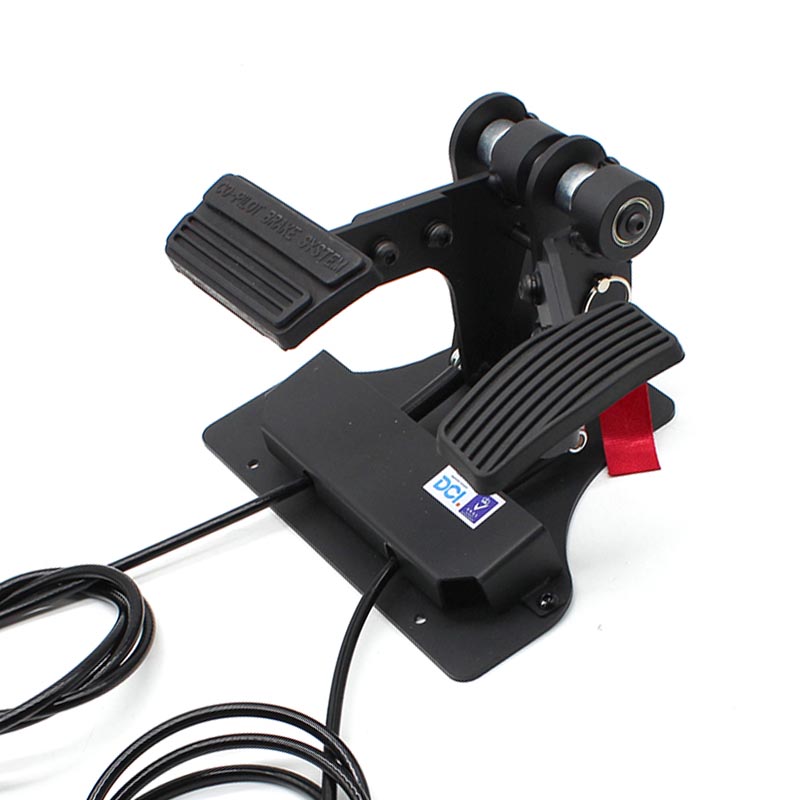
Brake failures during training trigger severe financial and legal ramifications. If an accident occurs, investigators will meticulously scrutinize your equipment. Using inadequate passenger-grade controls exposes your company to massive liability claims. Juries often view mismatched safety equipment as gross negligence. You must invest in a proper heavy duty co-pilot brake to mitigate these risks. Reliable equipment protects your drivers, your cargo, and your business reputation simultaneously.
Selecting the right system requires rigorous mechanical evaluation. You must match the secondary brake perfectly to your existing setup. Incorrect pairings compromise the safety of the entire vehicle.
First, consider brake system integration very carefully. Commercial trucks typically utilize pneumatic air lines for stopping power. Some medium-duty trucks still use hydraulic master cylinders. Your chosen commercial vehicle dual brake must tie into these systems flawlessly. It cannot cause air pressure drops. A poorly integrated valve will compromise the primary braking mechanism.
Next, evaluate material fatigue and long-term durability. Commercial components endure constant, repetitive abuse. You need high-grade steel components. Look for reinforced mounting brackets and sealed bearing housings. Plastic parts or weak alloys will warp rapidly over time.
Ergonomics and reaction time also matter immensely for instructors. The co-pilot needs immediate, unobstructed access to the pedal. We always evaluate pedal placement, travel distance, and tactile feedback. Instructors must apply full-force application instantly during emergencies. They need a rigid, highly responsive pedal feel.
Finally, demand a strict non-interference guarantee from the manufacturer. The secondary system must allow the primary driver to override it safely. When disengaged, the dual control should exhibit absolutely zero drag. Unwanted drag causes premature brake wear and dangerous overheating.
Follow these best practices during your evaluation process:
Navigating federal regulations remains mandatory for all commercial fleet operations. You must align your equipment with the Federal Motor Carrier Safety Administration (FMCSA). You also need to monitor the electronic Code of Federal Regulations (eCFR). These agencies dictate strict rules for secondary control setups.
The selected system must meet or exceed factory stopping distance requirements. It absolutely cannot delay air pressure delivery to the brake chambers. Federal inspectors will check for unauthorized or unsafe modifications during roadside audits. Non-compliant setups will result in immediate out-of-service violations.
You must maintain audit-ready documentation at all times. Demand comprehensive paperwork from your equipment manufacturer. Ask for standardized stress test reports and ISO certifications. Request clear liability warranties in writing. Having these documents on hand proves your ongoing commitment to safety. They protect you extensively during surprise compliance reviews.
Insurance implications play a huge role in this decision. Installing certified heavy-duty braking systems often impacts fleet insurance premiums favorably. Underwriters strongly favor fleets utilizing verified, commercial-grade safety equipment. You can sometimes negotiate better rates by providing proof of certified installations. Conversely, uncertified systems might void your liability coverage entirely in an accident.
Avoid these common mistakes regarding compliance:
Fleet managers constantly debate between factory options and aftermarket upgrades. Both avenues offer distinct advantages and drawbacks. You must evaluate them based on your specific fleet composition.
Choosing an OEM co-pilot solution offers immediate peace of mind. Pros include seamless, factory-level integration. You get guaranteed warranty compliance and zero compatibility guesswork. The manufacturer designs the brake specifically for that exact chassis. However, significant cons exist. Factory options suffer from limited availability for older fleet models. They often carry a very high upfront price tag. Furthermore, their configurations remain highly inflexible.
Premium aftermarket systems provide excellent, highly adaptable alternatives. A prime example is the ACAR heavy brake. Pros include much broader vehicle compatibility across mixed fleets. Engineers purpose-build these systems for extreme commercial use cases. They remain highly cost-effective for retrofitting existing vehicles. Cons involve stringent installation requirements. You must use certified upfitters for the installation process. You also need careful vetting to avoid counterfeit or subpar components.
| Feature Category | Factory Integrated Systems | Premium Aftermarket Upgrades |
|---|---|---|
| Vehicle Compatibility | Limited strictly to new, specific models | Broad retrofit capability across mixed fleets |
| Configuration Flexibility | Highly restrictive and fixed | Highly adaptable to cab layouts |
| Installation Process | Built directly on the assembly line | Requires booking certified upfitters |
| Availability for Older Trucks | Rarely available or supported | Widely available with custom brackets |
Deploying new safety equipment requires highly strategic planning. You must analyze fleet downtime carefully before beginning. Installing a heavy duty driver training brake takes deliberate time and focus. Realistic estimates suggest four to eight hours per vehicle. Phase your rollouts during off-peak hours or scheduled maintenance windows. This phased approach maintains uninterrupted fleet operations and protects revenue.
Choosing the right installer remains absolutely critical. Heavy-duty dual controls require certified commercial mechanics. Do not use standard automotive upfitters for this job. Passenger car mechanics rarely understand complex pneumatic air brake systems. A single misrouted air line can disable the entire truck. It can also cause catastrophic brake failure on the highway.
Calibration and field testing are mandatory post-installation procedures. Mechanics must perform rigorous leak-down tests for air brakes. You should conduct emergency stop simulations under full load. Perform these tests in a closed environment before road use. These tests verify maximum stopping power and identify any pneumatic lags.
Finally, establish strict, ongoing maintenance protocols. Set up preventative maintenance schedules for the co-pilot system. Mechanics should perform regular lubrication, tension checks, and visual inspections. Do not treat the secondary brake as a "set and forget" component. Routine audits ensure long-term reliability and protect the integrity of the primary brakes.
Investing in robust secondary braking systems protects your drivers and your business. It reduces severe liability risks and ensures operational continuity. You should never compromise on commercial safety standards. Passenger-grade parts simply cannot survive heavy-duty applications.
When shortlisting your options, prioritize regulatory compliance above all else. Ensure a perfect system architecture match, whether you use air or fluid. Documented durability and reliable engineering always outweigh a cheaper initial unit cost. Your training staff needs dependable tools to prevent catastrophic accidents.
Take proactive action today by auditing your current fleet specifications. Consult with a certified commercial brake specialist to review your setup. Request a detailed technical spec sheet from reputable manufacturers. This approach will help you find the most targeted, secure solution for your commercial vehicles.
A: Standard driving school brakes use thin cables designed for lightweight passenger cars. Heavy-duty co-pilot brakes utilize extreme structural reinforcement and specific pedal leverage ratios. They integrate directly into commercial pneumatic air brake systems. This direct integration handles massive commercial weight securely without snapping, fading, or delaying stopping power.
A: Yes, high-tier aftermarket systems are explicitly designed for this application. They interface directly with existing pneumatic lines using specialized relay valves. Professional installation ensures these systems draw air safely without causing dangerous pressure drops in the primary braking circuit. Always verify specific chassis compatibility before installation.
A: Not necessarily. Consumer protection laws prevent blanket warranty voids due to aftermarket parts. However, improper installation can void specific braking component warranties. Always use ASE-certified commercial mechanics for the installation. Professional upfitting preserves your warranty by ensuring the integration meets rigorous factory safety standards.
A: While OEM systems meet stringent factory build standards, automatic compliance is never guaranteed. The fleet operator remains ultimately responsible. You must ensure the system meets specific operational safety planner guidelines for your exact training scenarios. Regular testing and proper documentation remain required to maintain full FMCSA compliance.
A: Instructors must conduct basic pre-trip visual and functional inspections daily. Mechanics should perform deep mechanical audits quarterly. These audits must include checking air line integrity, pedal pivot lubrication, and testing for pressure leaks. This standard cadence guarantees maximum reliability and safety during training sessions.


