
TEL: +86-21-59909248
PHONE: +86-13641792935
Views: 0 Author: Site Editor Publish Time: 2026-07-13 Origin: Site


Driving schools and commercial fleet operators face a demanding, high-stakes balancing act every day on the road. They must prioritize instructor safety, build genuine student confidence, and rigorously protect vehicle integrity simultaneously. Balancing these priorities requires strategic hardware choices.
Procuring a dual control system represents far more than a simple hardware purchase. You are making a critical liability mitigation and fleet management decision. Substandard hardware exposes your business to unacceptable risks during unexpected roadway emergencies. Failing to secure reliable intervention tools compromises both human safety and physical assets.
This guide outlines the transition from evaluating your foundational needs to selecting the exact technical architecture. You will learn how to match different linkage styles to your specific vehicle roster seamlessly. Read on to discover how to navigate compliance requirements, installation processes, and long-term hardware reliability.
Selecting between cable-based and mechanical rod systems depends on vehicle chassis constraints and the need for cross-fleet transferability.
Opting for an OEM dual control setup preserves factory warranties, while aftermarket commercial dual brake kits offer broader fleet compatibility.
Certified installation and routine maintenance of a complete dual control system are mandatory to maintain legal compliance and protect against liability.
Hidden costs in procurement often stem from vehicle modification requirements and fleet downtime, rather than the hardware itself.
Fleet operators must evaluate training hardware beyond basic functionality. You need comprehensive success criteria to ensure maximum return on investment and peak operational safety. Establishing these baselines early prevents costly retrofitting later.
Consider these fundamental pillars when selecting driver training components:
Liability and risk mitigation: Reliable controls immediately shift intervention capabilities to the instructor. This rapid transfer reduces collision risks significantly during critical student errors. Every microsecond saved during a braking intervention lowers your overall liability exposure.
Instructor ergonomics and tactile feedback: Instructors spend hours performing repetitive foot movements. Poor pedal placement causes severe operational fatigue. Delayed brake response forces instructors to overcompensate. Prioritizing ergonomic hardware keeps trainers alert and physically comfortable.
Preserving fleet residual value: Many systems require permanent vehicle modifications. Cutting bulkheads or drilling structural panels permanently diminishes resale value. You must evaluate how much permanent alteration a specific hardware kit requires before approving fleet-wide installations.
Student experience: Aggressive or jerky instructor interventions often create severe psychological setbacks for learners. Smooth, responsive mechanical feedback minimizes this disruption. Maintaining a calm cabin environment accelerates the student's learning curve and builds driving confidence.
Common mistakes occur when buyers solely chase the lowest upfront hardware price. Evaluating success requires analyzing physical ergonomics alongside vehicle preservation.
Choosing the correct underlying architecture determines how your hardware performs under pressure. Manufacturers divide these setups into two primary categories. Each category presents unique engineering compromises.
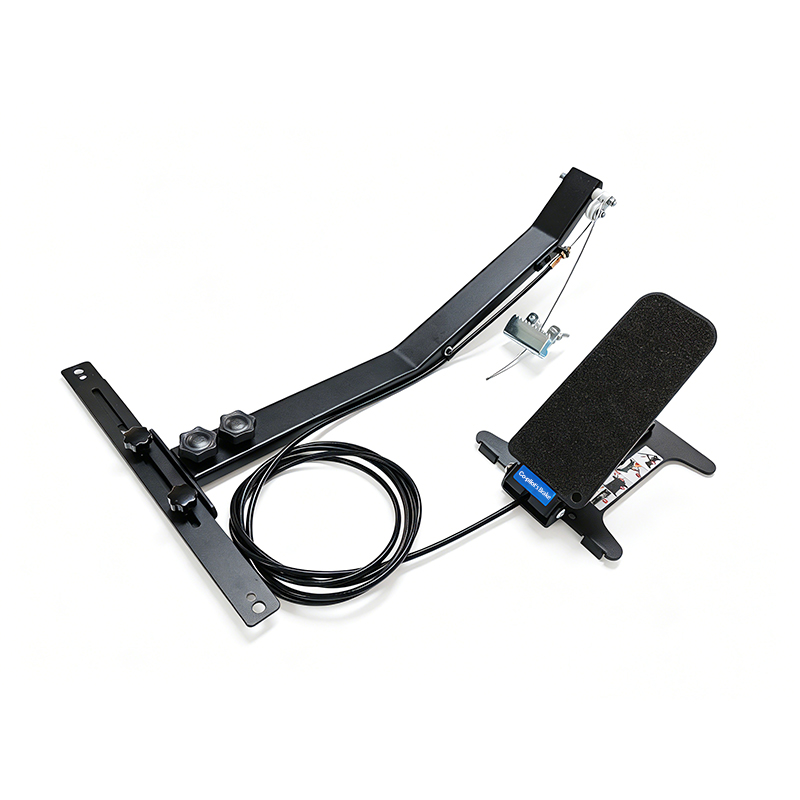
Cable setups utilize flexible steel wires routed around existing engine bulkheads. Installers snake these cables through the firewall without making extensive structural modifications. This routing flexibility suits modern, tightly packed engine bays.
Pros: Cable architectures offer high transferability between completely different vehicle makes. They serve as an ideal solution for mixed fleets containing various brands. You can frequently transfer pedal boxes from retired sedans to new hatchbacks.
Cons: Steel cables inevitably experience stretch over time. This stretching introduces dangerous slack into the pedal mechanism. Fleet managers must enforce strict maintenance schedules to prevent delayed brake engagement. Routine tension checks remain mandatory.
Mechanical rod architectures rely on rigid steel linkages. These strong metal bars connect the instructor pedal directly to the primary vehicle training brake set. They provide a highly robust, unyielding connection between the two footwells.
Pros: Rods deliver immediate tactile feedback to the instructor. You eliminate any risk of cable snap or progressive stretch. These systems prove highly durable for heavy commercial use, including truck driver training applications.
Cons: Mechanical rods demand precise, vehicle-specific fitments. You cannot easily transfer a rod system from a Ford to a Toyota. This architecture also involves higher upfront installation complexity and increased labor costs.
Architecture Comparison Chart
Feature | Cable-Operated Systems | Mechanical Rod Systems |
|---|---|---|
Feedback Delay | Slight potential for lag if slack exists | Zero delay; immediate response |
Transferability | High (Universal components) | Low (Vehicle-specific sizing) |
Installation Intrusiveness | Minimal firewall routing | Often requires precise structural mounting |
Maintenance Frequency | High (Regular tensioning required) | Low (Occasional lubrication only) |
Fleet procurement teams eventually face a sourcing dilemma. They must choose between factory-backed integrations or versatile third-party hardware. Both avenues offer distinct operational advantages.
Procuring an OEM dual control setup means purchasing directly through the original vehicle manufacturer or their exclusive partners. These systems guarantee exact geometric fitment.
They feature deep integration with factory safety sensors. Modern cars utilize Advanced Driver Assistance Systems (ADAS) and automatic emergency braking. OEM setups communicate seamlessly with these computers. The car understands when the instructor applies the brake, preventing radar fault codes.
Furthermore, OEM choices guarantee warranty preservation. They comply strictly with manufacturer specifications. However, these systems face severe limitations regarding availability. Manufacturers rarely offer instructional packages across all vehicle trim levels, restricting your purchasing options.
Aftermarket kits provide immense scalability for standardized driving school fleets. When you operate diverse vehicle brands, third-party manufacturers offer universal solutions. A single commercial dual brake platform can unify the operational feel across your entire garage.
You must carefully balance the cost-to-outcome ratio here. Aftermarket hardware usually carries lower initial costs. Yet, you may face potential integration challenges regarding modern electronic braking systems. Improperly installed aftermarket switches might trigger dashboard warning lights.
Always prioritize selecting patented, rigorously tested systems. Avoid unverified generic imports. Reputable aftermarket brands provide detailed engineering documentation, ensuring your modifications remain structurally sound.
Integrating secondary pedals into a motorized vehicle brings intense regulatory scrutiny. Fleet operators must navigate strict compliance landscapes to operate legally.
You must understand local transport authority mandates for instructional vehicles. Regulations vary drastically between regions. Some jurisdictions mandate full dual clutch setups for manual transmissions. Conversely, authorities often enforce brake-only requirements for automatic vehicles. Operating outside these baselines immediately voids commercial insurance policies.
Mechanical redundancy separates professional equipment from amateur modifications. You must evaluate systems featuring independent pedal return springs. If the student pins their foot under the primary brake pedal, the instructor must still retain braking capability. Independent springs prevent the instructor pedal from binding the student pedal. This fail-safe mechanism saves lives during panic-induced scenarios.
Post-incident liability investigations scrutinize every hardware decision. Procurement workflows must include verifiable testing documentation. Always secure formal engineering certifications from the hardware manufacturer. If an accident occurs, presenting a verified audit trail proves your business took all necessary safety precautions. Lacking this documentation leaves your operation vulnerable to gross negligence claims.
Always request ISO or CE certification documents from suppliers.
Keep physical and digital copies of installation sign-offs in the vehicle's permanent file.
Verify that the specific hardware model complies with your local transport ministry.
Hardware acquisition represents merely the first step. Proper implementation dictates how effectively the equipment serves your instructors over the years.
Attempting in-house installation introduces massive risk. Utilizing a certified installer remains absolutely critical for maintaining insurance validity. Certified technicians understand airbag module locations, structural hard points, and wiring harnesses. A DIY mistake could compromise the firewall's structural integrity or disable primary safety features.
Every hour a vehicle spends in the shop represents lost instructional revenue. Managers must factor in 4 to 8 hours of installation time per vehicle. Complex mechanical rod systems lean toward the 8-hour mark. Schedule these installations during seasonal slow periods or weekends to minimize financial impact.
Establishing realistic maintenance expectations extends component life. Technicians should perform thorough inspections every 10,000 miles. These routine appointments must include:
Cable tension checks and recalibrations.
Application of high-grade grease to all mechanical lubrication points.
Pedal height adjustments to maintain optimal ergonomic positioning.
Visual inspections of firewall mounting brackets for stress fractures.
Vehicles age out of driving school fleets rapidly. You must calculate hardware reusability during fleet turnover. When retiring a chassis, transferring a complete dual control system offsets new vehicle costs. Cable systems excel here, requiring minimal labor to remove. You generally only need to purchase inexpensive new mounting brackets to fit the old pedals into a new car.
Upgrading your driver training fleet requires methodical hardware selection and stringent compliance tracking. Your shortlisting logic should follow a strict sequence. First, define your specific vehicle chassis constraints and dashboard electronics. Second, choose either the mechanical rod or cable architecture based on those constraints. Third, strictly vet your certified installation partner before committing funds.
We strongly recommend initiating a pilot installation. Outfit a single fleet vehicle first. Allow your senior instructors to test the physical ergonomics under real-world conditions. Have your mechanics verify electronic system compatibility over a few weeks. Once the pilot proves successful, you can confidently proceed with a full fleet rollout, knowing your liability and safety bases remain securely covered.
A: Certified installations utilizing non-destructive mounts generally protect factory warranties. Dealerships recognize professional safety modifications. However, improper DIY installations or aggressive bulkhead drilling can void specific chassis guarantees. Always consult your dealership prior to installation.
A: Yes, depending on the architecture. Cable-based systems are largely universal. Transferring them typically requires only purchasing new vehicle-specific pedals or mounting brackets. Conversely, mechanical rod systems feature highly vehicle-specific lengths and angles, making cross-model transfers very difficult.
A: Industry standards recommend comprehensive inspections every 10,000 miles. Fleet managers should align these routine checks with standard oil change intervals. Mechanics must inspect cable tension, verify linkage integrity, and lubricate pivot points to ensure immediate pedal response.
A: They can, if installed improperly. Proper electronic integration is absolutely necessary. Certified installers ensure instructor brake inputs register correctly on the vehicle's computer network. This seamless communication ensures interventions do not trigger conflicting ADAS faults or dashboard error codes.


