
TEL: +86-21-59909248
PHONE: +86-13641792935
Views: 0 Author: Site Editor Publish Time: 2026-07-15 Origin: Site


Operating heavy trucks requires immense skill, deep focus, and absolute precision. During driver education, the margin for error approaches zero due to massive vehicle weights. Novice operators facing complex traffic scenarios inevitably create inherently high-risk environments. Passenger-grade dual controls simply cannot handle the extreme forces of heavy-duty pneumatic or hydraulic systems. Relying on these light-duty components risks catastrophic mechanical failure. They can leave instructors completely helpless during roadside emergencies and expose fleets to severe legal liability. This article provides an objective, technical evaluation of the ACAR B15 system. We will explore how it meets strict durability, compliance, and installation standards for modern heavy fleets. You will learn if this specific hardware aligns seamlessly your operational requirements.
Purpose-Built: The ACAR B15 is engineered specifically for commercial vehicle payloads, avoiding the mechanical shearing risks of light-duty aftermarket systems.
Compliance Alignment: Designed to support FMCSA safety guidelines and eCFR Title 49 braking requirements for commercial operations.
Integration: Focuses on OEM-level integration to ensure primary braking systems remain uncompromised during co-pilot intervention.
Implementation Need: Requires professional installation and strict maintenance scheduling to maintain mechanical integrity over time.
Passenger vehicles and commercial trucks behave very differently under heavy braking. A standard sedan weighs roughly 4,000 pounds. A fully loaded Class 8 tractor-trailer can easily weigh up to 80,000 pounds. This massive discrepancy completely changes the physics of stopping. The kinetic energy generated by commercial payloads demands immense stopping power. A co-pilot brake for commercial vehicle application must endure extreme structural stress. Instructors often must apply sudden, forceful pedal pressure to trigger the air brake treadle valve. Light-duty passenger dual controls lack the industrial-grade tensile strength required here. Their components bend or shear under commercial braking pressures.
Standard wire-cable systems routinely fail in heavy-duty environments. These basic setups rely on braided steel cables running across the cab floor. When subjected to repetitive, high-force application, these cables inevitably stretch. Cable stretch introduces dangerous latency between the instructor pressing the pedal and the vehicle actually stopping. During panic stops, a stretched cable can snap entirely. This failure removes the instructor's ability to intervene, guaranteeing an accident.
Fleet managers must apply strict evaluation criteria when selecting secondary braking hardware. You cannot compromise on performance. We recommend evaluating commercial systems based on three non-negotiable metrics:
Zero Interference: The secondary hardware must never impede the primary driver's pedal travel or mechanism.
Immediate Actuation: The linkage must transfer force instantly, matching the primary pedal's response time exactly.
Verifiable Compliance Data: The manufacturer must provide engineering data proving alignment federal braking regulations.
To highlight the structural differences, consider this comparison chart evaluating dual control categories:
Feature Matrix | Passenger-Grade Controls | Commercial-Grade Systems |
|---|---|---|
Force Transfer Method | Braided wire cables | Solid steel push-rods and crossbars |
Actuation Delay | High (due to cable stretch) | Zero (direct mechanical linkage) |
Brake Valve Interface | Light hydraulic master cylinders | Pneumatic treadle valves / Heavy hydraulics |
Fatigue Resistance | Low (susceptible to fraying) | High (rigid pivot points) |
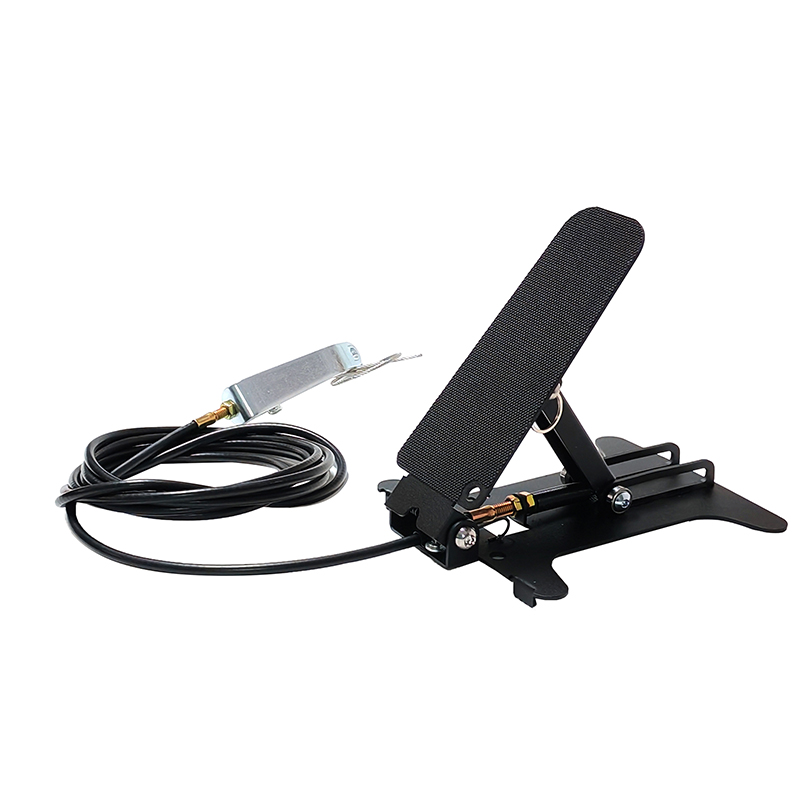
The ACAR-B15 brake addresses the exact failure points of standard dual controls through superior material engineering. Its pedal assembly utilizes heavy-gauge forged steel. This prevents pedal flex during high-stress emergency braking. The linkage systems abandon wire cables entirely. Instead, they rely on rigid metal crossbars and solid push-rods. Force-transfer mechanisms utilize high-grade pivot joints equipped brass bushings. These materials ensure consistent force delivery over thousands of actuations.
Interfacing a secondary pedal an existing commercial braking architecture requires precision. Commercial trucks utilize complex air/pneumatic systems or heavy hydraulic setups. A proper heavy duty commercial brake override must trigger these systems safely. The ACAR-B15 achieves this without dangerous modifications. It mechanically links the instructor’s pedal directly to the factory treadle valve linkage. Mechanics never need to cut into primary air lines or modify the main hydraulic master cylinder. This design isolates the factory pneumatics from aftermarket interference. The truck’s original braking logic remains completely intact.
Stress and fatigue resistance dictate the true lifespan of a training control. Instructors initiate panic-braking scenarios routinely to test student reflexes. The ACAR-B15 undergoes rigorous cycle-testing assumptions to handle this abuse. The rigid steel linkages resist deformation even when instructors stand heavily on the pedal. The solid architecture transfers 100% of the instructor's leg force directly to the primary brake linkage. This prevents the mushy pedal feel commonly found in inferior wire-based systems.
Universal aftermarket brake kits present severe integration risks for commercial fleets. Many cheap systems require mechanics to cut holes in the cab floorboards. Others force technicians to splice directly into critical OEM brake lines. Splicing air lines introduces new potential leak points. A sudden loss of pneumatic pressure causes the truck's spring brakes to lock up uncontrollably in traffic. Cutting structural floor panels compromises the cab's safety rating and introduces rust vulnerabilities.
The ACAR B15 avoids these hazards entirely through a highly optimized installation footprint. It relies on non-destructive mounting techniques. Mechanics secure the main brackets using existing factory bolt holes whenever possible. This preserves firewall integrity completely. Bracket alignment ensures the cross-cab linkages do not interfere steering columns or HVAC ducting. The final ergonomic placement positions the pedal naturally for the instructor. They can reach the override instantly without leaning awkwardly across the center console.
Protecting your fleet's liability is just as crucial as protecting the equipment. A true OEM co-pilot integration approach safeguards the vehicle's factory warranty. Because the primary air valves remain unmodified, truck manufacturers cannot easily void powertrain or chassis warranties. Furthermore, maintaining uncompromised factory braking systems limits fleet liability in the event of an accident. Insurance investigators scrutinize aftermarket modifications heavily. Utilizing a non-invasive, purpose-built mechanical override demonstrates a commitment to documented safety standards.
Operating a training fleet means navigating strict regulatory lenses. Federal regulations heavily govern commercial vehicle braking systems. Specifically, eCFR Title 49, Part 393, Subpart C outlines mandatory braking performance and fail-safe mechanisms. Any secondary control installed in a commercial cab must not degrade these mandated performance metrics. The ACAR B15's direct mechanical linkage ensures the vehicle meets all stopping distance requirements outlined in Title 49. The primary driver retains full braking capacity, while the instructor gains an equally effective override.
Federal Motor Carrier Safety Administration (FMCSA) safety planner guidelines emphasize operational redundancy. Training fleets must mitigate risks proactively. Reliable secondary control aligns perfectly FMCSA recommendations for hazard reduction. By equipping vehicles robust override systems, fleet managers actively reduce preventable collision rates during instructional periods. This proactive safety stance helps fleets maintain favorable safety scores and protects their operating authority.
Beyond compliance, reliable hardware directly impacts instructor confidence and training outcomes. In commercial driver training, students must experience real-world scenarios. They need to navigate steep grades, tight urban intersections, and heavy traffic. Instructors often hesitate to expose students to these environments if they doubt their dual controls. Knowing they possess a fail-safe, heavy-duty override changes this dynamic. Instructors can push trainees closer to real-world limits safely. Better training exposure ultimately produces safer, more capable professional drivers.
Implementing a heavy-duty dual control system requires careful logistical planning. Installation bottlenecks are a recognized reality. You cannot install the ACAR B15 in a quick afternoon session. Fitting the brackets, aligning the rigid linkages, and calibrating the pedal travel takes time. Fleet managers must account for vehicle downtime. This downtime represents a required business reality. Furthermore, certified technicians must perform the installation. Improperly aligned crossbars will bind under pressure.
Ongoing reliability depends entirely on strict routine inspection protocols. Instructors and mechanics must verify the system's integrity regularly. We recommend implementing a baseline inspection framework before every training shift. Your standardized protocol should include:
Visually inspecting all rigid linkage connections for physical damage or loose hardware.
Verifying adequate lubrication at all primary pivot points and brass bushings.
Testing pedal travel to ensure smooth actuation without binding or scraping.
Checking the return spring tension to confirm the pedal resets immediately after release.
Understanding failure mitigations is crucial for fleet safety. If a fleet ignores maintenance, the system will eventually degrade. Dust and debris can foul unlubricated pivot points, causing linkage binding. Binding prevents the instructor's pedal from returning to the neutral position. This can inadvertently drag the vehicle's brakes, causing dangerous overheating. Fleets can prevent these scenarios easily. Standardized, documented checklists force instructors to catch binding issues before the truck ever leaves the yard.
The ACAR B15 stands out as a purpose-built, heavy-duty solution for commercial fleets. It completely discards the flawed wire-cable architecture found in repurposed passenger car tools. By utilizing solid steel linkages and non-invasive mounting brackets, it delivers the industrial reliability required for heavy vehicle instruction. The system respects factory pneumatics, preserving both safety and warranty status.
This system fits very specific operational profiles. Heavy commercial driver training schools, municipal transit training departments, and utility fleet educators should shortlist this hardware immediately. It handles massive vehicle payloads flawlessly. Conversely, operators of light-duty expediter vans or standard pickup trucks do not need this level of reinforcement. Standard dual controls usually suffice for those lighter applications.
Before moving to procurement, take clear action steps. Consult directly your fleet mechanics to discuss installation timelines. Contact authorized distributors to verify exact cab compatibility for your specific truck makes and models. Finally, acquire and review the technical schematics to ensure the linkage path clears your specific dashboard configurations.
A: When installed properly via non-destructive mounting brackets, it typically does not interfere primary systems. It actuates the factory pedal mechanism externally. Because mechanics do not cut air lines or modify factory valves, it generally preserves OEM warranties. However, fleet managers must verify this their specific truck manufacturer.
A: Instructors should execute a quick pre-trip checklist before every shift. They must check pedal return spring tension, visually inspect linkages for loose bolts, and perform a static pressure test. The pedal must move smoothly and return instantly without binding.
A: Yes, fleets can reuse the core pedal assembly and primary linkage bars. However, because cab designs vary between truck models, you will likely need new, vehicle-specific mounting hardware and custom-length crossbars for the new truck.
A: Yes, it is engineered specifically for heavy commercial payloads, including Class 8 tractor-trailers. The rigid steel architecture handles the extreme pedal pressures required to actuate heavy-duty pneumatic treadle valves safely.


