
TEL: +86-21-59909248
PHONE: +86-13641792935
Views: 0 Author: Site Editor Publish Time: 2026-02-02 Origin: Site


Learning how to drive is an exciting but also intimidating experience for many beginners. It represents freedom and independence, yet it also comes with the responsibility of handling a vehicle safely in different traffic conditions. Because new drivers lack experience and confidence, training often involves risks that can affect not only the learner but also the instructor, other drivers, and pedestrians. This is why special safety measures have been introduced in vehicles used for driving lessons, and among these, the passenger side brake is one of the most important.
The passenger side brake is a simple concept, yet it has transformed the way driving is taught around the world. It allows instructors to step in and control the vehicle during emergencies, offering both safety and reassurance. To truly understand why it is so valuable, it is necessary to explore what this brake is, how it works, and why it has become a standard tool in driver education.
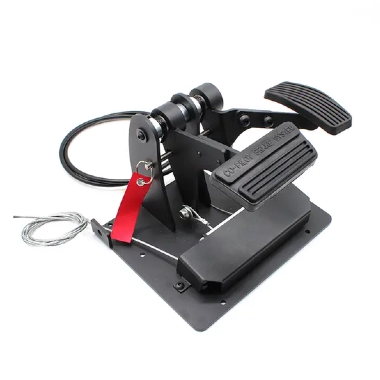
A passenger side brake is an additional pedal located on the instructor’s side of the vehicle. It connects directly to the car’s braking system, meaning that when the instructor presses it, the car slows down or stops just as if the student had pressed the brake on the driver’s side. In many training vehicles, this setup is part of a dual control system, which can also include an accelerator or clutch in some cases, but the brake is always the key component.
The idea is straightforward: while the learner operates the car, the instructor maintains the ability to take over if things go wrong. This ensures that even if the student hesitates, panics, or makes a mistake, the car can still be brought to a safe stop without delay.
The passenger side brake was introduced after early driving instruction revealed the dangers of teaching without such a tool. In the past, instructors relied on verbal commands and physical interventions like grabbing the steering wheel, but these actions were not always enough to prevent collisions. As cars became faster and traffic grew heavier, it was clear that instructors needed more direct control.
Regulatory bodies and driving schools quickly recognized the value of having a secondary braking system. Over time, passenger side brakes became standard in many countries, and in some regions, regulations even made them a legal requirement for vehicles used in formal driver training. This change drastically improved the safety of both instructors and students, while also protecting others on the road.
Although different designs exist, the mechanism is generally simple. In many cars, the instructor’s brake is connected mechanically to the driver’s brake using rods or cables, ensuring both pedals engage the same braking system. Some modern vehicles use hydraulic or pneumatic assistance to create a smoother, more responsive action.
Regardless of the design, the key feature is immediacy. The moment the instructor presses the pedal, the car reacts. This eliminates delays and allows instructors to intervene in a split second. It is this quick response that makes the passenger side brake so effective in preventing accidents.
The importance of the passenger side brake becomes clear when considering the challenges learners face. New drivers often struggle with reaction times, judgment of distances, and coordination between pedals. In high-pressure moments, they may freeze or make the wrong decision, which can have serious consequences on busy roads. With a passenger side brake, the instructor can instantly correct these errors by stopping the vehicle before a situation turns dangerous.
This safety net creates a more relaxed environment for learners. Students know that if they fail to react quickly enough, their instructor has the ability to prevent an accident. This knowledge reduces anxiety and allows them to focus on gradually improving their skills instead of constantly worrying about making a catastrophic mistake. At the same time, it gives instructors peace of mind, enabling them to concentrate more on teaching rather than anticipating potential crashes.
Another major advantage is that the passenger side brake allows learners to practice in real traffic conditions rather than being limited to empty parking lots or simulation-based training. Exposure to real-world situations is crucial in developing competent drivers. By having the brake in place, instructors can confidently take students onto busier roads, knowing that they can step in at any moment if needed.
To appreciate its importance further, one can consider the many scenarios in which the passenger side brake proves its worth. Imagine a beginner approaching a pedestrian crossing but failing to notice someone stepping off the curb. Without intervention, the result could be an accident. The instructor, however, can press the brake and stop the vehicle in time.
Another common situation occurs in traffic when cars ahead suddenly slow down or stop. Learners may not yet have developed the habit of checking distances and could fail to brake in time. Instructors can use their brake to avoid a rear-end collision. Mistakes such as pressing the accelerator instead of the brake, misjudging parking maneuvers, or ignoring a stop sign are also examples where instructor intervention becomes essential. In all these cases, the passenger side brake not only prevents harm but also turns the moment into a valuable teaching experience.
Beyond physical safety, the passenger side brake has significant psychological benefits. Students often feel nervous when driving for the first time, especially in traffic. Knowing that their instructor has control over the brake reduces stress and makes them more willing to attempt difficult maneuvers. This supportive environment helps them build confidence more quickly.
Instructors also benefit psychologically. Teaching someone to drive is stressful, especially when dealing with unpredictable mistakes. Having direct control over the car provides reassurance, allowing instructors to remain calmer and more focused on explaining driving techniques and rules. This mutual sense of security fosters a healthier, more productive learning relationship between teacher and student.
The effectiveness of a passenger side brake depends on its reliability. Driving schools must ensure that these systems are properly installed and regularly maintained. Routine checks are necessary to confirm that the brake responds instantly and with the same stopping power as the driver’s pedal. Mechanical linkages must be inspected for wear, while hydraulic or pneumatic systems must be checked for leaks or malfunctions.
Daily testing before lessons is a common practice to guarantee safety. A malfunctioning passenger side brake could give instructors a false sense of security and place both them and their students at risk. Therefore, maintenance is just as important as the system itself.
As technology advances, passenger side brakes are also evolving. Some modern systems incorporate electronics that integrate with advanced driver assistance technologies. For example, sensors may provide feedback on how often the instructor uses the brake, offering useful data on a learner’s progress. Others may connect with electronic braking systems for smoother control.
Although the core function remains unchanged, these developments highlight how the passenger side brake continues to adapt to modern needs. It remains one of the most reliable and practical safety tools in driver education, and it is unlikely to lose its relevance anytime soon.
The passenger side brake is more than just an extra pedal in a training car. It represents a vital layer of protection that makes the process of learning to drive significantly safer and more effective. By giving instructors the ability to stop the car instantly, it prevents accidents, reduces anxiety, builds confidence, and allows students to gain valuable real-world driving experience without unnecessary risk.
From its origins as a simple safety solution to its place in modern training vehicles, the passenger side brake has proven to be indispensable. As driving instruction continues to evolve, this system will remain a cornerstone of safe and responsible driver education. Thanks to this tool, new drivers can enter the road with greater confidence, instructors can teach with peace of mind, and everyone sharing the road can feel a little safer.