
TEL: +86-21-59909248
PHONE: +86-13641792935
Views: 0 Author: Site Editor Publish Time: 2026-02-27 Origin: Site


Learning to drive is a milestone that brings both excitement and responsibility. For new drivers, mastering the coordination of steering, acceleration, braking, and traffic awareness can be challenging. In response to these challenges, driving instructors and training schools have relied on innovative solutions to ensure safety while facilitating effective learning. One of the most important of these innovations is the passenger side brake—a system that allows instructors to intervene directly in emergency situations.
Over time, the passenger side brake has evolved from a simple mechanical add-on to a sophisticated safety tool integrated into modern training vehicles. Its development reflects advances in vehicle technology, driving pedagogy, and safety regulations. Understanding this evolution provides insight into the crucial role these systems play in driver education today.
The concept of a passenger side brake first emerged in response to the practical challenges faced by early driving instructors. Instructors often relied solely on verbal commands or physical intervention, such as grabbing the steering wheel, to correct mistakes. These methods were risky and insufficient, especially as cars became faster and traffic conditions more complex.
Early passenger side brakes were mechanical systems designed to give the instructor basic control over the vehicle’s braking function. These systems typically involved a rod or cable connected from an additional pedal on the passenger side to the driver’s brake pedal. When pressed, the instructor could slow or stop the car almost immediately.
While primitive by modern standards, these early systems represented a significant improvement in safety. They allowed instructors to step in during emergencies, reducing the likelihood of collisions and giving learners a sense of security. Even at this stage, the passenger side brake was not just a tool for emergency intervention; it also contributed to building confidence among new drivers.
As vehicles became more complex and driving lessons more structured, the demand for improved passenger side brakes grew. Manufacturers began exploring hydraulic and pneumatic systems to replace the purely mechanical linkages. These innovations allowed for smoother braking, reduced wear on components, and more responsive control.
Hydraulic systems, for instance, transfer force through fluid pressure rather than mechanical rods. This allows for a more consistent and precise braking response, which is especially useful in modern vehicles with sensitive braking systems. Pneumatic enhancements offered additional flexibility, enabling instructors to manage braking effort with greater ease and less physical strain.
During this period, the design of passenger side brakes also began to consider ergonomics. Pedal placement, resistance, and adjustability became important factors to ensure that instructors could use the brake comfortably during long training sessions. The improvements in design not only enhanced safety but also allowed for more effective teaching, as instructors could intervene seamlessly without distracting the learner.
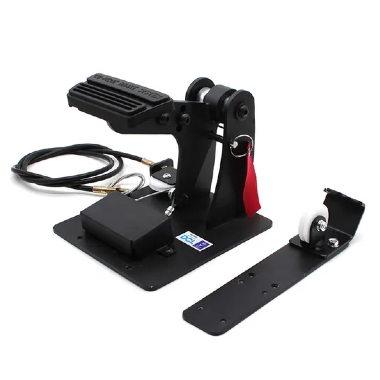
With the rise of dual-control systems, passenger side brakes became part of a more comprehensive approach to training vehicle safety. Dual-control vehicles not only feature an instructor-operated brake but may also include controls for acceleration and clutch operation. This integration allows instructors to manage nearly all aspects of vehicle operation, providing an unprecedented level of safety and instructional support.
The inclusion of dual-control features elevated the role of the passenger side brake. No longer just a reactive tool, it became a central component in proactive teaching. Instructors could now guide learners through complex traffic situations, correct errors in real-time, and ensure that learners develop proper driving habits. The evolution from a single emergency brake to part of a dual-control system represents a significant leap in both safety and pedagogy.
Modern passenger side brakes have benefited from broader advances in vehicle technology. Electronic braking systems, sensor-assisted feedback, and computer-controlled intervention have all influenced the design of contemporary dual-control systems.
For example, some modern systems integrate the instructor’s pedal with the vehicle’s electronic braking system (EBS), allowing for precise, responsive braking that mirrors the car’s own safety features. Sensors can monitor pedal force, braking speed, and vehicle stability, providing additional feedback to the instructor and even alerting them to potential hazards. These technologies reduce the likelihood of accidents and improve the overall learning experience for students.
In addition, advancements in materials and precision engineering have made components more durable and reliable. Lightweight alloys, high-strength steels, and reinforced linkages minimize wear and ensure consistent performance over thousands of training hours. The result is a passenger side brake that is safer, more durable, and more effective than any system available in the early days of driver education.
One of the most significant aspects of the evolution of passenger side brakes is their impact on learner psychology. Early mechanical systems provided basic reassurance, but modern, highly responsive systems offer much more.
Knowing that an instructor has precise control over the vehicle allows learners to focus on developing their skills rather than worrying about mistakes. This reduces anxiety, encourages experimentation, and accelerates skill acquisition. Instructors can introduce controlled risks, such as merging into heavy traffic or navigating complex intersections, without compromising safety.
As passenger side brakes became more integrated with dual-control systems, the confidence-building effect was amplified. Learners experience real-world driving conditions while feeling secure, which helps them internalize safe driving habits and become competent, independent drivers.
The evolution of passenger side brakes has also been shaped by regulatory requirements. Many countries now mandate dual-control systems or specific safety standards for vehicles used in driver education. These regulations ensure that training vehicles are equipped to handle emergencies and provide a secure learning environment.
Modern installations must meet strict standards for reliability, responsiveness, and durability. Professional installation and regular maintenance are often required to comply with regulations. These measures guarantee that both learners and instructors are protected and that training vehicles remain safe for use over long periods.
Proper installation is critical to the effectiveness of a passenger side brake. Whether mechanical, hydraulic, or electronic, the system must be precisely calibrated to match the vehicle’s braking response. Misalignment or poor calibration can compromise safety and reduce learner confidence.
Maintenance is equally important. Mechanical components must be lubricated, linkages inspected, and hydraulic systems checked for leaks or pressure loss. Electronic systems require software updates and sensor calibration to ensure consistent performance. Driving schools that adhere to strict maintenance protocols not only ensure safety but also prolong the lifespan of their investment in dual-control systems.
Looking forward, the evolution of passenger side brakes is likely to continue alongside advances in automotive technology. Integration with autonomous driving features, artificial intelligence, and real-time monitoring systems may provide even greater levels of safety and instructional support.
For example, future systems could automatically adjust braking force based on learner performance, detect potential hazards before the learner reacts, or provide feedback to instructors through digital dashboards. These innovations could make the learning process safer, more efficient, and more tailored to individual student needs.
Despite these technological advances, the core purpose of the passenger side brake remains the same: to provide instructors with control, ensure safety, and build learner confidence. The tools may evolve, but their mission endures.
From simple mechanical add-ons to sophisticated dual-control systems, passenger side brakes have come a long way in enhancing driver education. Their evolution reflects advances in technology, changes in instructional methodology, and the growing emphasis on safety in training environments. Modern systems offer precise control, seamless integration, and psychological reassurance, making them indispensable tools for driving instructors.
Today, passenger side brakes are more than just safety devices; they are confidence-building tools that enable learners to develop skills effectively while navigating real-world driving challenges. As technology continues to advance, these systems will become even more integrated, intelligent, and responsive, ensuring that the next generation of drivers is safer, more skilled, and more confident.
For driving schools and instructors seeking high-quality, reliable components for dual-control systems, companies like Shanghai Jiaying Precision Hardware Co., Ltd. provide advanced solutions that meet modern safety standards and support effective driver training.